
AI and Loan Fraud - I'm Appropriately Startled
Oct 21, 2026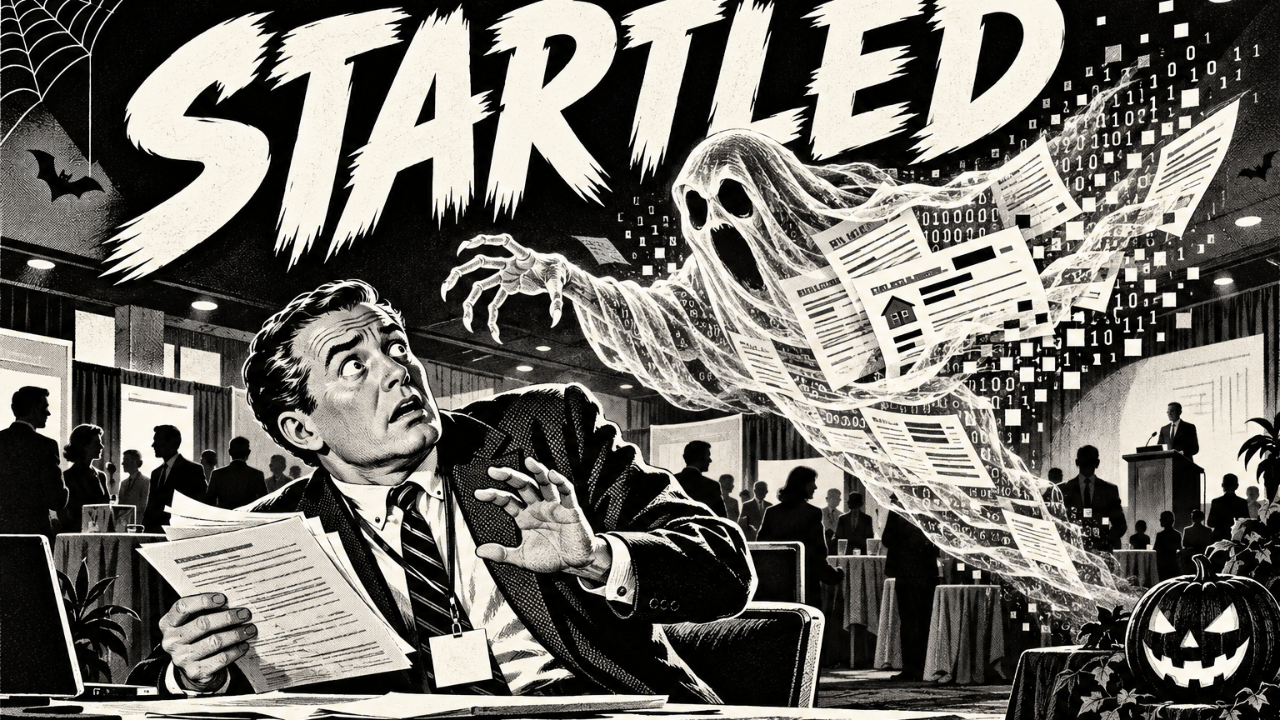
MBA Compliance and Risk 2026: Appropriately Startled
Service providers and consultants stood hopefully at booths while prospects, the mortgage lenders, wandered the hall. With the MBA Compliance and Risk Conference held deep underground at the D.C. Grand Hyatt, there was zero cell reception.
So with calls and texts an impossibility, eye contact and mingling was a well engineered conference feature. Equally well engineered was the presentation of the fraud risks faced by lenders in 2026.
By end of day, there was a growing awareness that because of AI, the industry was more vulnerable than ever.
The What-Ifs
Frank Abagnale, famous as the “Catch Me If You Can” rogue-turned-crime-fighter delivered the opening keynote address. His message - you can trust nothing and must verify everything. Lock down your credit file, stay off social media, use biometric ID verification, and independently confirm every detail. There can be no assumption of validity for any information used in an underwriting decision, not the employment, the assets, nor the actual existence of a putative borrower.
A new and devastating fraud, synthetic loans and identities, is growing. These “synth scams” mean that perhaps nothing in the loan file is real, from the property to the borrower. It all could be AI.
So instead of prudence demanding that we reverify income, we are left to wonder if the borrower even exists - a task for which a notary stamp is uniquely ill-suited. For a period, the industry took comfort in the prospect of video verification of ID, but now AI can fake all of that. And the chances of recovering funds after your loan proceeds have disappeared behind a crypto curtain are vanishingly small.
Conference panelists, talking about rogue AI agents, created a terrible list of what-ifs: what if an AI agent wiped out servicing records; what if AI went rogue and double-funded loans or created borrower avatars that disappeared immediately after funding? And what if quitclaim deeds and payoff statements could no longer be trusted?
These are not just intellectual exercises - a recent news story in Los Angeles featured an example of a property “stolen” with fake deeds and lien releases. Until the advent of AI, this kind of thing took real talent.
The concern now is that this kind of malfeasance is within reach of middle-schoolers.
EFFICIENCIES AND DEFICIENCIES
We are as far from cut-and-paste paystubs as we are from the HP-12C. The risks have changed, and the solutions are evolving.
For decades, a roughly 10% QC sampling has been required of mortgage lenders. It was a reasonable number, intended to be statistically significant while recognizing the burden of making such a check. Now, with Al, we are fast approaching a “low-cost” solution to recheck all loan data, helping address both the inefficiencies and deficiencies inherent in mortgage lending.
However, Phil McCall, president of Aces Quality, stated that “there will always be the need for human involvement, regardless of the AI technology. Accountability and judgment are essential to management, regardless of underlying AI tools.”
The conference featured many of those available tools. Teresa Trent of Infrrd, an AI solution that automates mortgage document processes, agrees that the ability to increase efficiency across QC operations while still reducing risk, is essential to good management. Similarly, Keith Kemph of Default Analytics stated that their AI tool is able to check all properties in a portfolio and instantly determine whether any transfers of title had taken place.
False positives will be the burr under the saddle of these broad sweeps, but attendees were open to these creative fixes to new and serious problems.
Appropriately Startled
Many attendees were appropriately startled. For any industry professional thinking they were going to hear the same stories of reverifications and quality control, they were shaken. Like a thunderclap over a sleeping dog, the presentations put everyone on high alert.
You might have arrived in DC expecting a discussion of risks that you had practically gotten bored of. Now, tense and alert, you scan the new threats and think, “how do I defend against this?”
Amidst the uncertainties, one thing was clear - the threats have changed, and lender protocols must as well.
